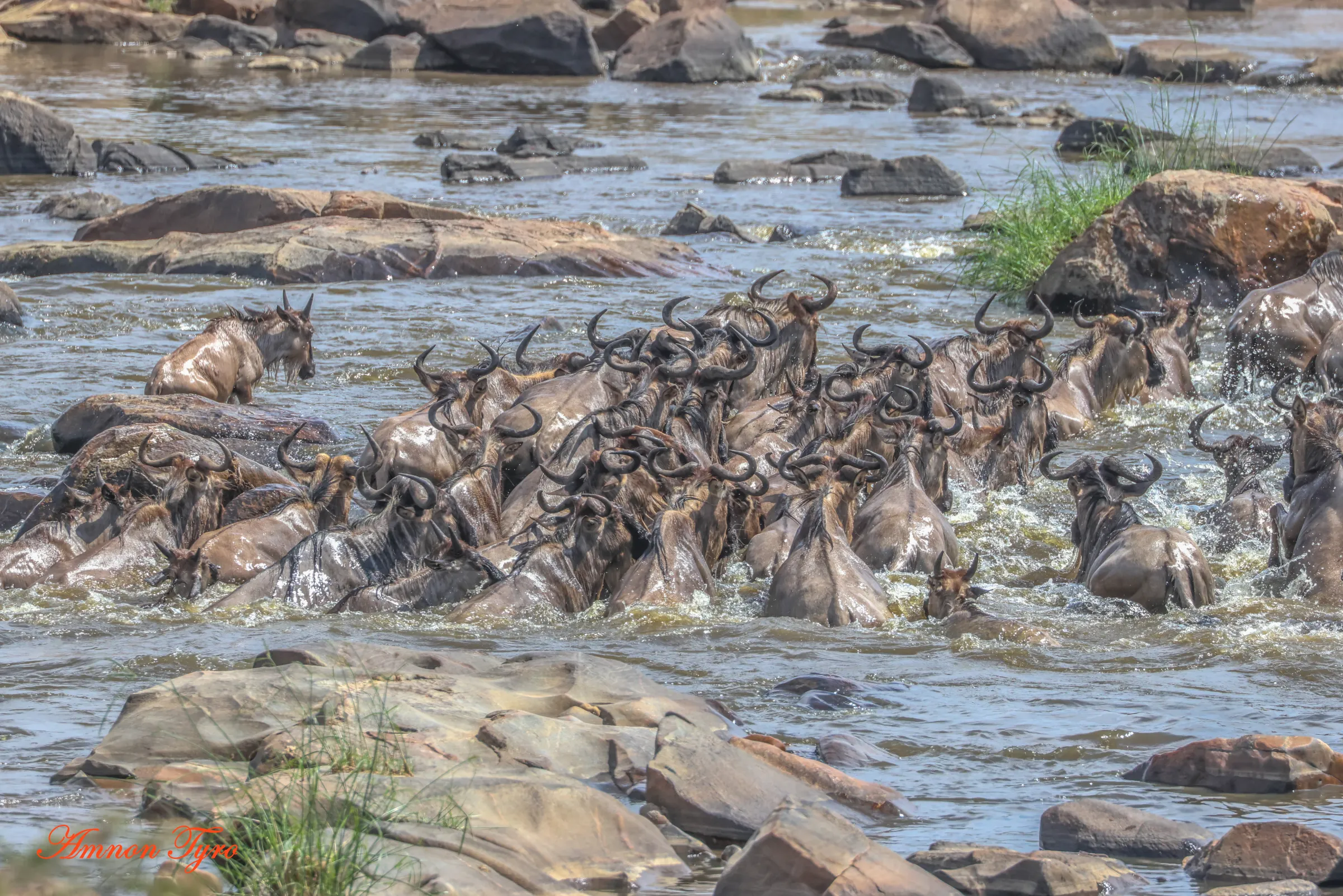
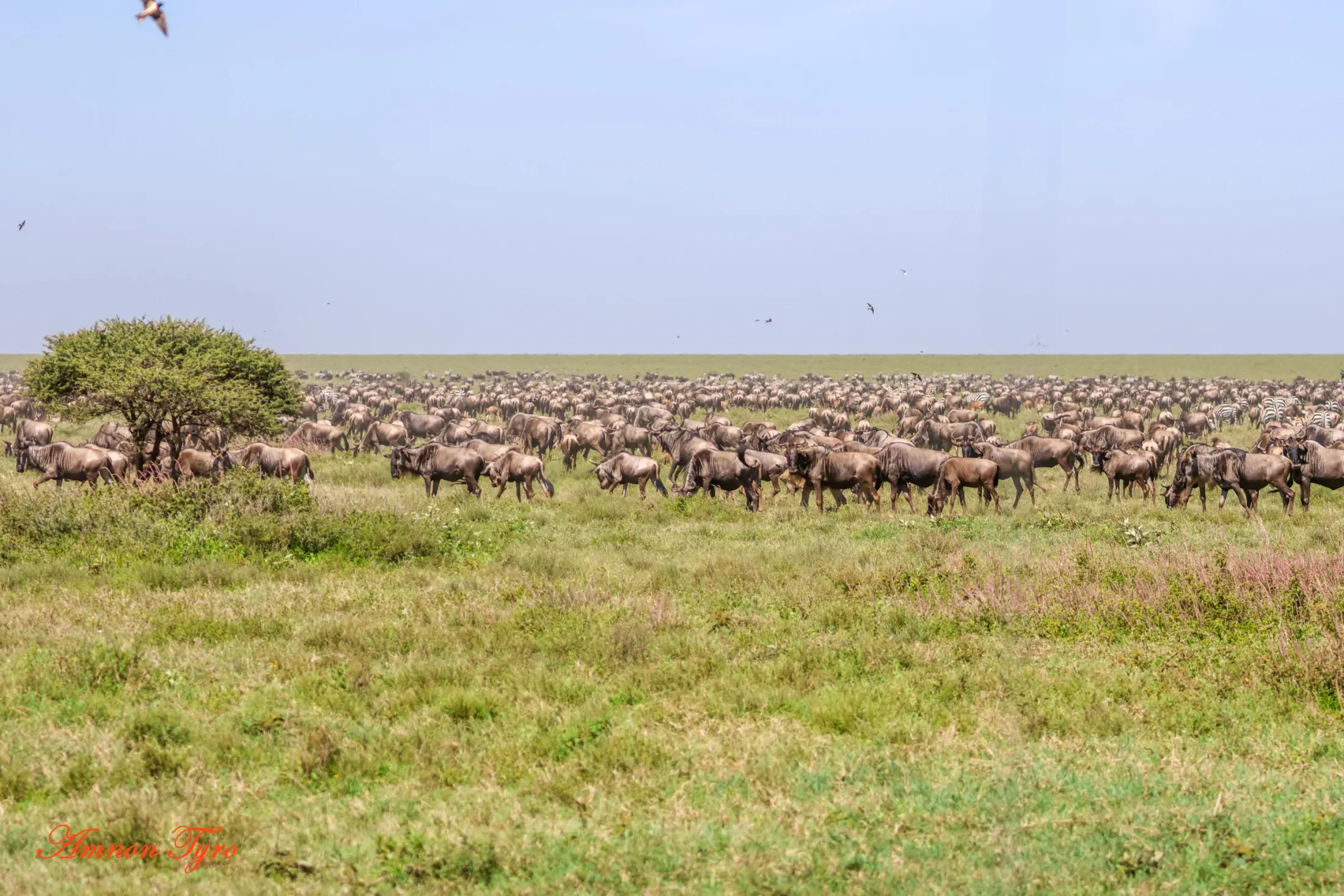
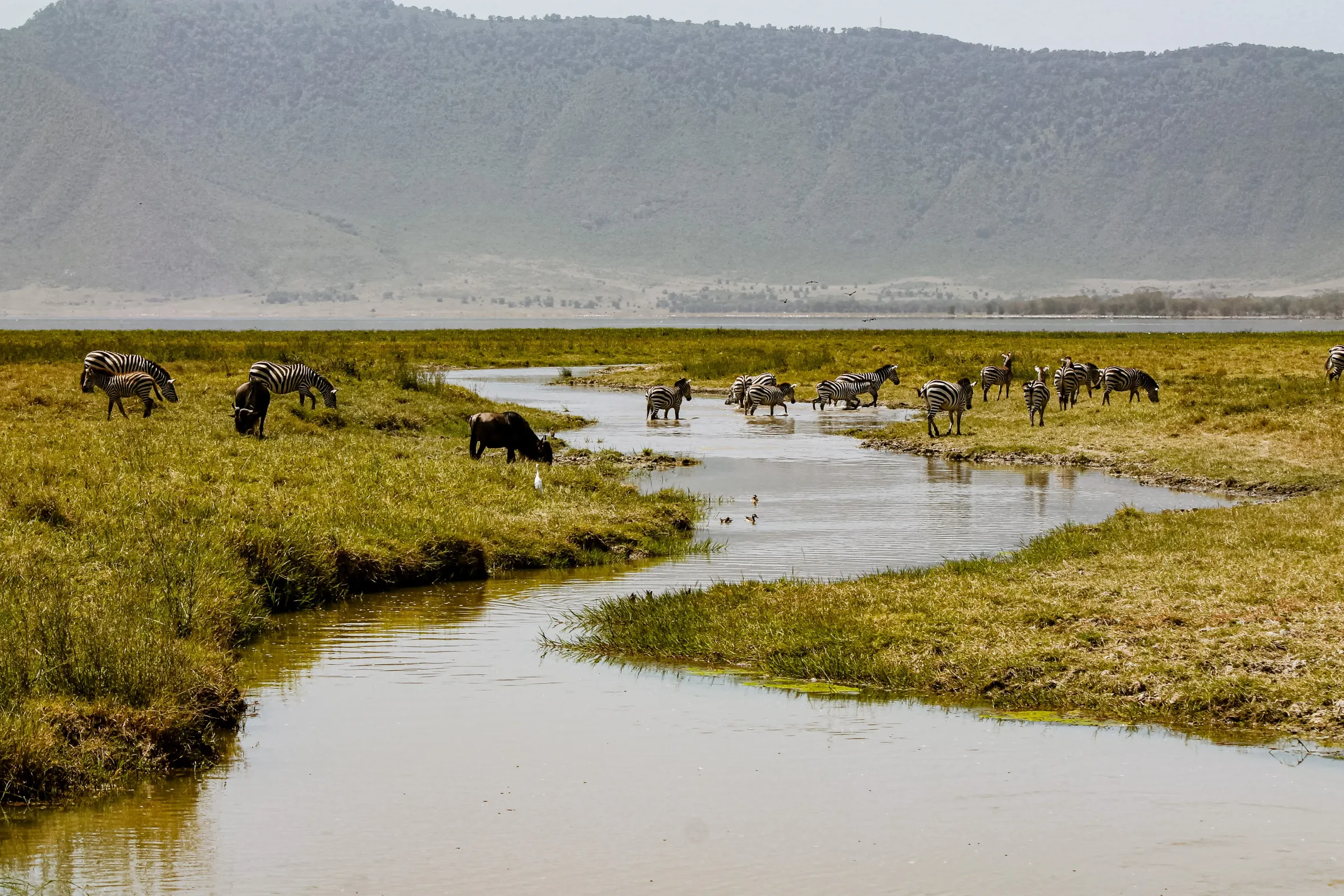
Ndutu isn't a national park in its own right — it's an area straddling the boundary of the Ngorongoro Conservation Area and the southeastern Serengeti, named for the seasonal soda lake at its centre. What draws people here is timing rather than a park boundary: between roughly January and March, the migratory herds gather on these short-grass plains to calve, drawn by mineral-rich grass that's unavailable elsewhere in the ecosystem.
The concentration of newborn wildebeest calves in turn draws an equally concentrated gathering of predators, making Ndutu in calving season one of the most action-dense wildlife-viewing periods anywhere in Africa. Outside that window, the area is quieter, and several camps close for the year until the herds return.
Lake Eyasi, a further hour or so south of Ndutu, is sometimes added to itineraries through this area for a different kind of experience entirely — a visit to Hadzabe hunter-gatherer and Datoga pastoralist communities, one of the few remaining hunter-gatherer societies in Africa.
- —The wildebeest calving season — roughly half a million calves born within a few weeks, January to March
- —Exceptional, close-range predator action as lion, cheetah and hyena follow the newborn herds
- —A genuinely different landscape from the rest of the circuit: flat, open, short-grass plains
- —Lake Eyasi nearby, for a cultural visit to Hadzabe and Datoga communities
Wildlife & landscape
- —Wildebeest and zebra — gathered in huge numbers for calving between roughly January and March
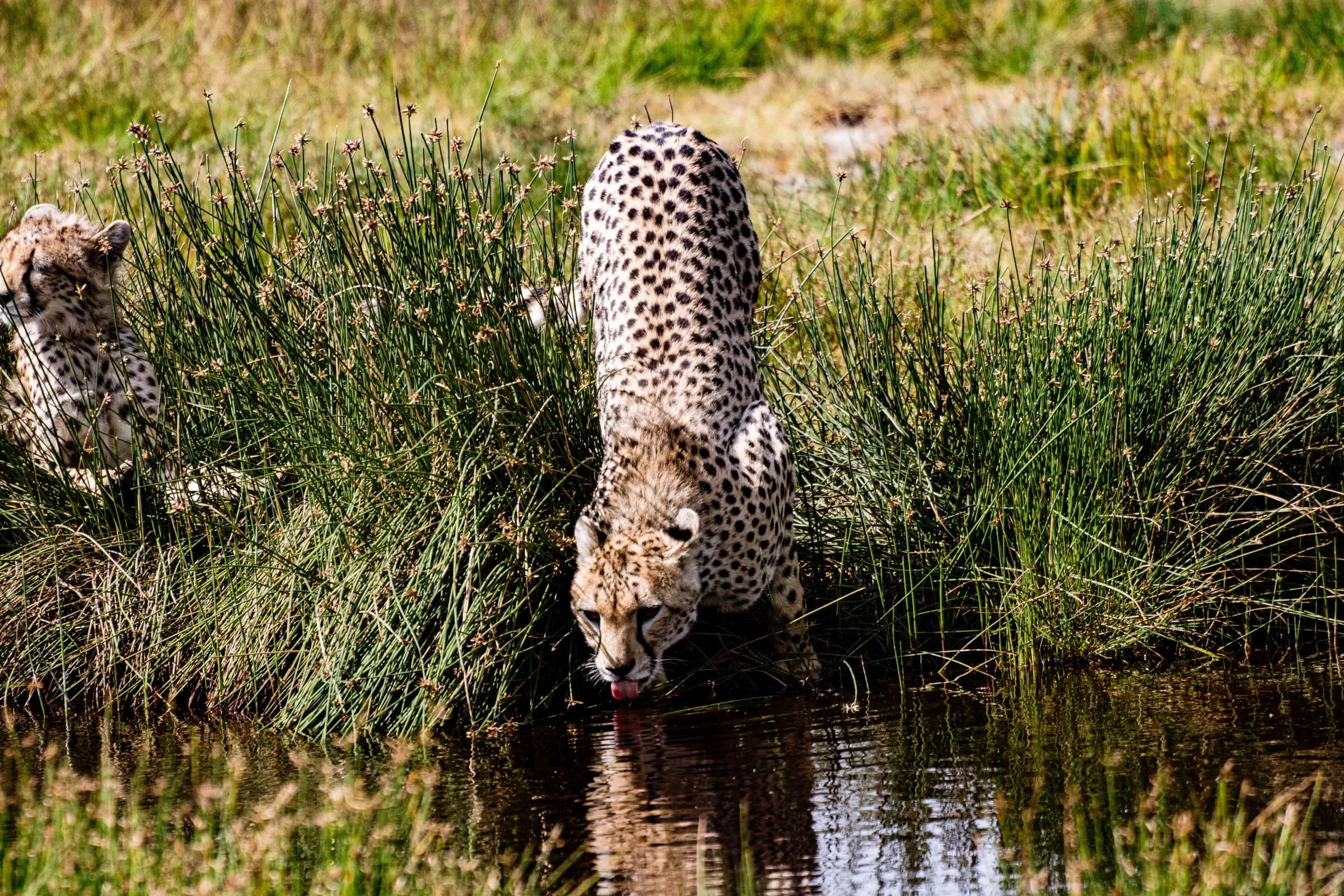
- —Cheetah — the open plains here suit their hunting style better than almost anywhere else on the circuit
- —Lion and spotted hyena — following the calving herds closely during the season
- —Golden and black-backed jackal, seen more reliably here than in denser habitat elsewhere
Signature experiences
Roughly January to March, thousands of calves can be born in a single morning across the plains — timed trips here are built specifically around this window rather than treated as a general safari stop.
A morning walk with a Hadzabe hunting party, or time with a Datoga blacksmith community, is a genuinely different addition to a wildlife-focused itinerary — arranged as an add-on rather than a default stop.
Best time to visit
Jan — Calving begins; huge herd concentrations on the plains.
Feb — Peak calving season and predator activity.
Mar — Calving continues early in the month before herds move on.
Apr — Herds have largely moved north; several camps close for the season.
May — Off-season; most camps remain closed.
Jun — Herds elsewhere in the ecosystem; not a priority-season stop.
Jul — Herds in the western corridor and beyond; area is quiet.
Aug — Off-season; camps largely closed.
Sep — Herds far to the north; not typically visited this month.
Oct — Herds still north; area remains quiet.
Nov — Herds beginning to move back south as short rains start.
Dec — Herds arriving ahead of calving; camps reopening.
Ndutu is reached by road from Ngorongoro (around two to three hours) or by light aircraft to a nearby airstrip. It's almost always built into an itinerary that also includes the Serengeti and Ngorongoro, timed specifically for the January–March calving window.
Two to three nights during calving season gives a realistic chance of witnessing births and the predator activity that follows. Outside that window, most of our itineraries route around Ndutu rather than through it, since the herds — and many of the camps — simply aren't there.
Seasonal mobile camps are the norm here, since much of the area's accommodation exists specifically to serve the calving season and closes for the rest of the year. We book these only for trips timed to the January–March window. See our lodges and camps.
Wakali trips featuring Ndutu & the Southern Plains
Timed and routed around the herds — Ndutu in calving season, the north for the river crossings.
Nearby destinations
Travel tips
- —This is a seasonal specialty, not a year-round stop — timing your trip for January–March is essential if calving is the goal
- —Book well ahead for this window; camp capacity is limited and demand is high
- —A Lake Eyasi cultural morning is worth adding if you have an extra day either side
Frequently asked questions
Roughly January to March, with February typically the peak. Exact timing shifts slightly year to year with rainfall, so we confirm the window closer to your travel dates.
Not really as a dedicated stop — most of the wildlife and camps that make it worthwhile are seasonal. Outside January–March we route itineraries through the Serengeti and Ngorongoro instead.
Related reading
Tell us your dates and interests and we'll write back with a real itinerary, priced and ready to change.