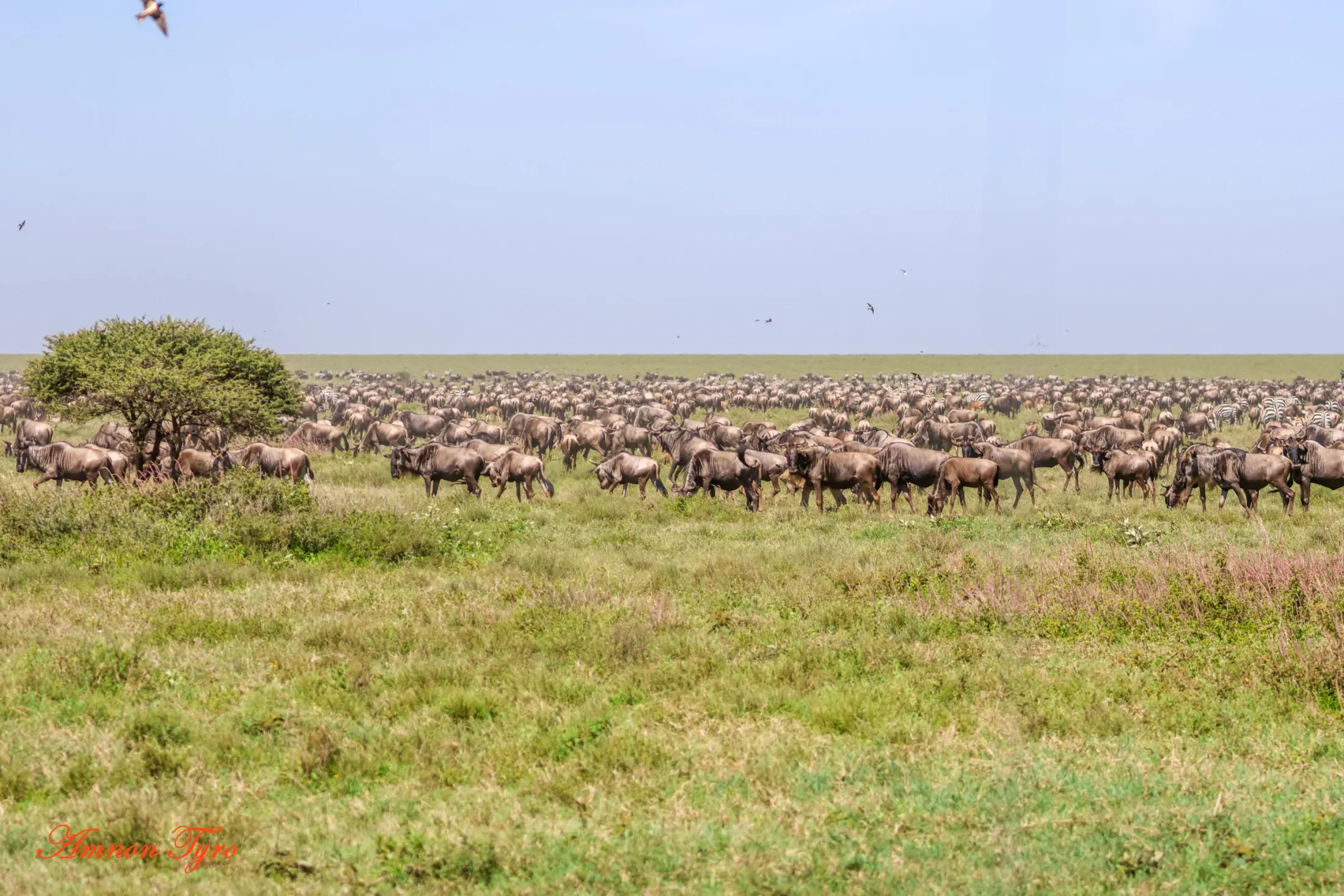
The Serengeti is the park the whole northern circuit is built around. It's vast enough that no two visits look alike: the short-grass plains near Ndutu in the south, the central Seronera valley with its resident big cats, the riverine forest of the western corridor, and the open north near the Mara River all behave like different parks depending on the month you arrive.
What doesn't change is the density of resident wildlife — lion, cheetah, leopard and hyena are here in good numbers year-round, migration or not. The migration itself, over a million wildebeest and zebra moving in a rough clockwise loop through the ecosystem, is what draws the crowds, but a well-timed Serengeti safari works even in the months the herds are somewhere else entirely.
- —Africa's most complete predator-prey ecosystem, with resident lion prides you can follow visit after visit
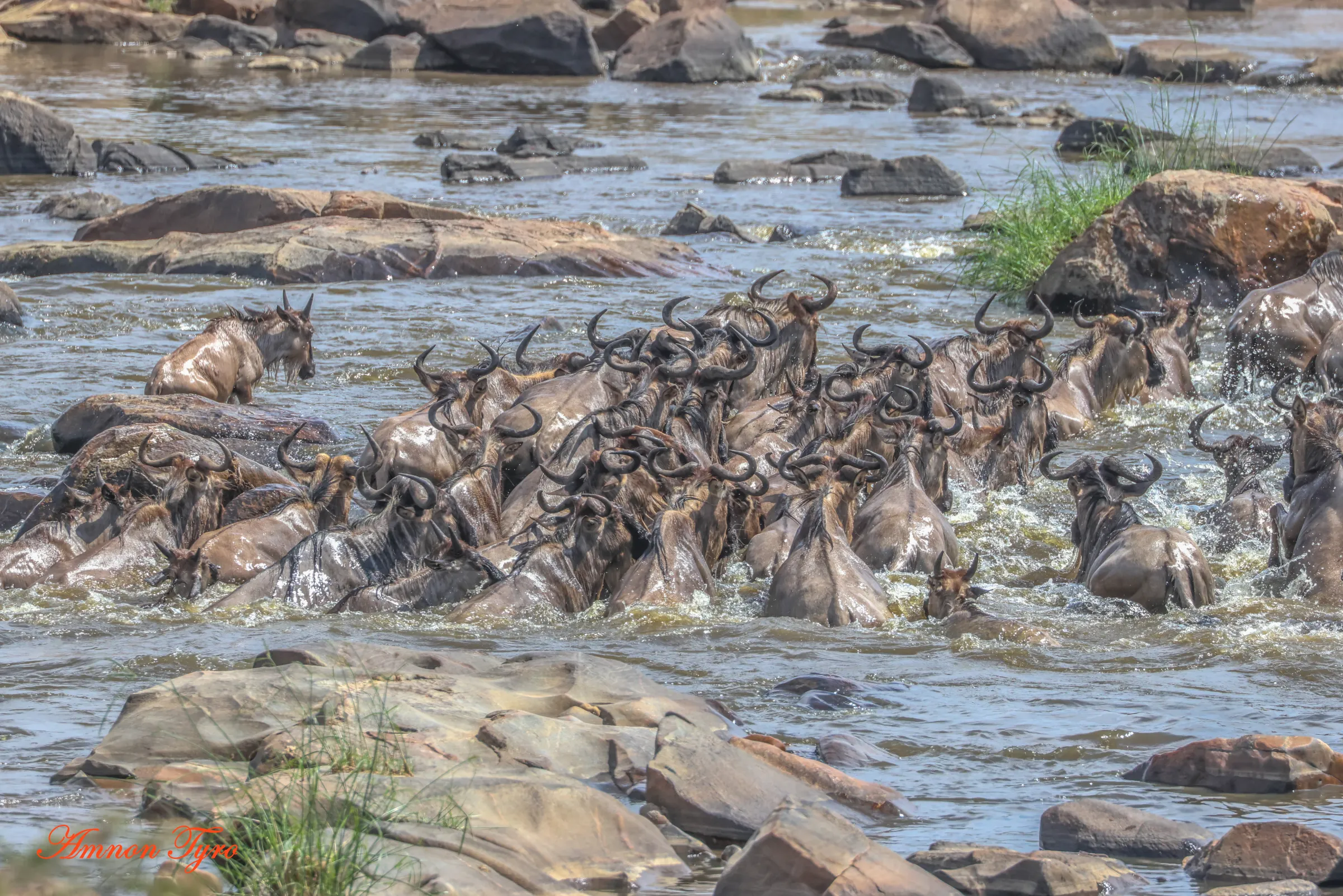
- —The Great Migration's river crossings, when the timing lines up (roughly July–October in the north)
- —Genuinely huge horizons — the plains, the kopjes, the acacia-lined rivers each feel like a different park
- —Excellent year-round game viewing even outside migration months, thanks to resident wildlife
Wildlife & landscape
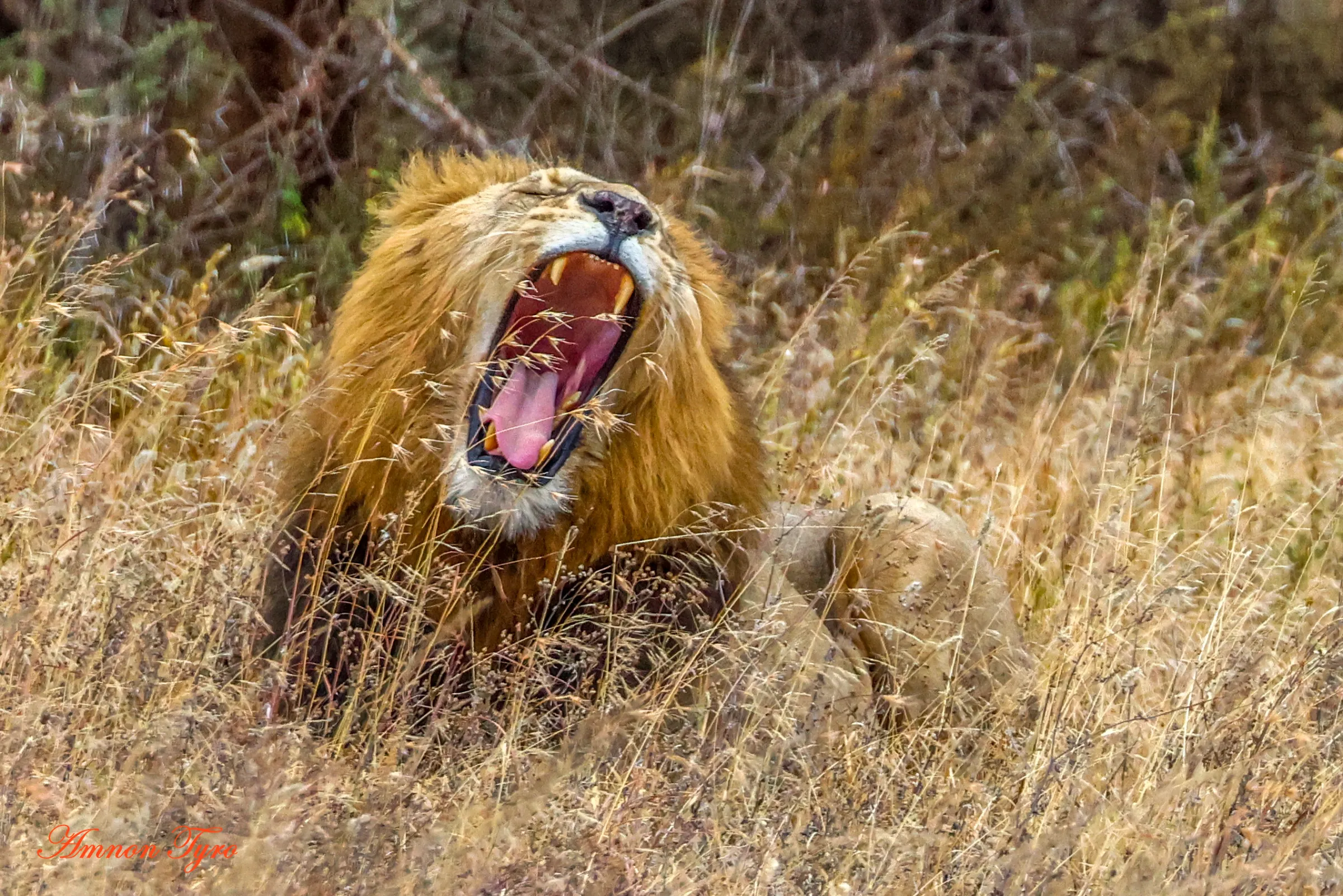
- —Lion — some of the best-studied and most photographed prides in Africa, especially around Seronera
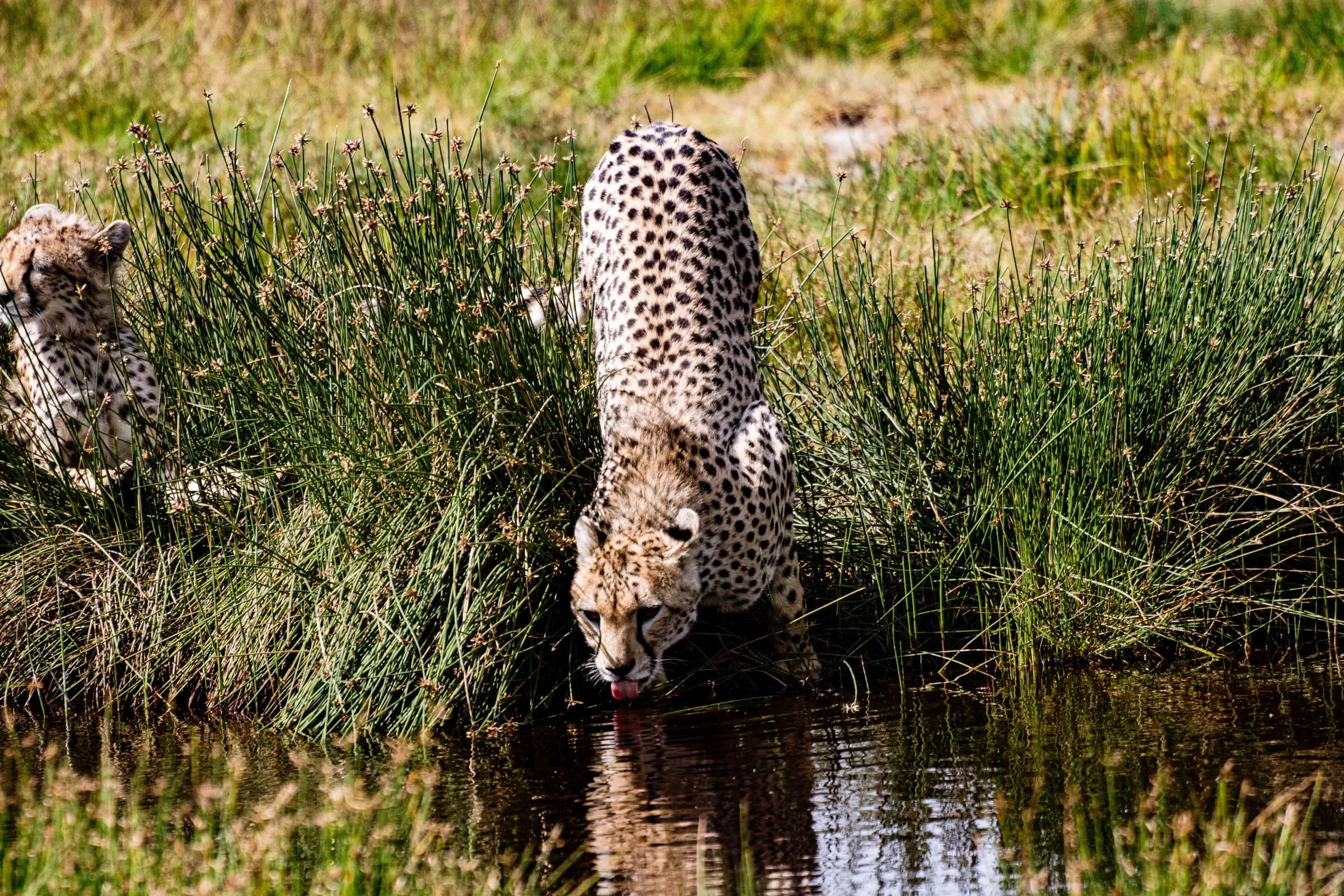
- —Cheetah — favouring the open short-grass plains where their speed is an advantage
- —Leopard — harder to find, most often along the Seronera river's riverine trees
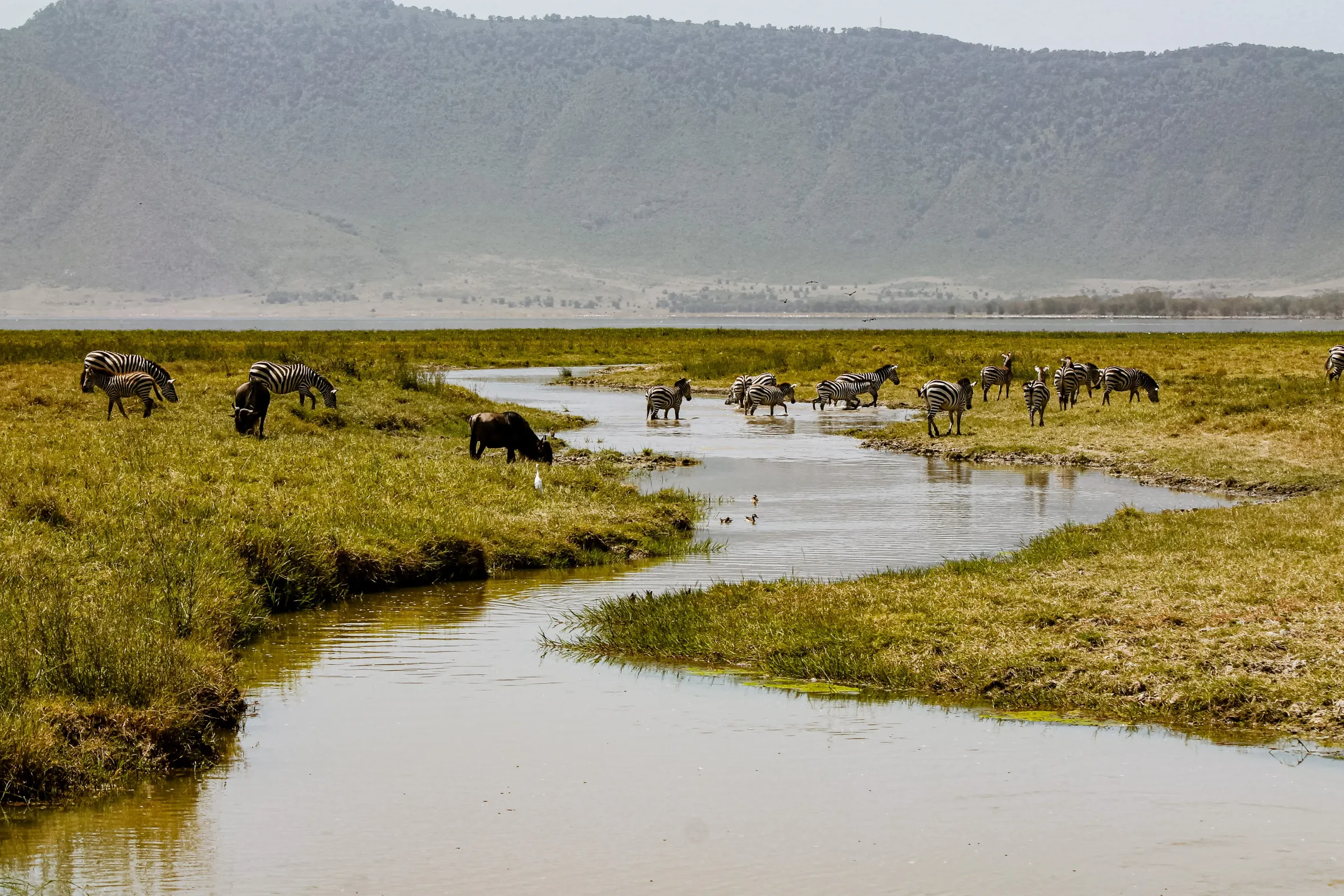
- —Wildebeest and zebra — up to two million animals on the move during the migration
- —Elephant, giraffe, topi, hartebeest and healthy numbers of hippo and crocodile along the rivers
Signature experiences
Our guides track herd movements day to day rather than following a fixed route, so where we position you inside the ecosystem shifts with the season — Ndutu's plains for calving, the western corridor in May–June, the north for the Mara crossings from July.
The Serengeti's central valley, permanent water and dense tree cover mean resident predators are here whatever the season — the most reliable single game-drive area in the park.
A sunrise balloon flight over the plains, followed by a bush breakfast, is the one activity almost every returning guest says they'd do again — bookable as an add-on to any Serengeti stay.
Best time to visit
Jan — Herds gathering on the southern plains; hot and mostly dry.
Feb — Calving season peaks in the south — huge predator activity.
Mar — Long rains begin; still good in the south, green and quieter.
Apr — Heaviest rains; some camps close, but rates drop and it's lush.
May — Rains easing; herds moving through the western corridor.
Jun — Dry season begins; migration in the west, skies clearing.
Jul — Herds pushing north; first Mara River crossings possible.
Aug — Peak dry season; river crossings continue in the north.
Sep — Still dry and clear; the classic month for crossings.
Oct — Migration turning south again; excellent visibility throughout.
Nov — Short rains begin; herds heading back toward the south.
Dec — Short rains taper; herds gathering ahead of calving.
Most guests fly directly into the Serengeti (Seronera, Kogatende or Ndutu airstrips, depending on where you're staying) from Arusha, a 45–75 minute scheduled flight. Driving in from Arusha via Ngorongoro is the more affordable option and part of most of our lodge safaris — it's a long day on the road (around 6–7 hours including the crater rim), but it's how most first-time visitors combine the two parks.
Two nights is the minimum to make the flight or drive worthwhile; three to four nights lets your guide reposition you as sightings develop rather than rushing between fixed camps. Our longer northern-circuit itineraries typically spend three to five nights in the Serengeti depending on the season.
Where you sleep matters more here than in almost any other park, because it determines which part of the ecosystem you're in. We place guests from simple public campsites near Seronera through to comfort tented camps and exclusive-use lodges on the northern plains, chosen by month rather than by a fixed camp list — see our lodges and camps page for the tiers we work with. See our lodges and camps.
Wakali trips featuring Serengeti National Park
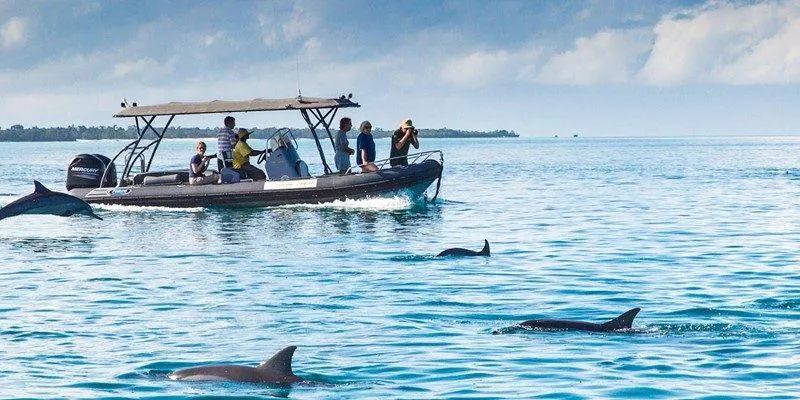
Game drives in the northern parks, then white sand and warm water on the coast.
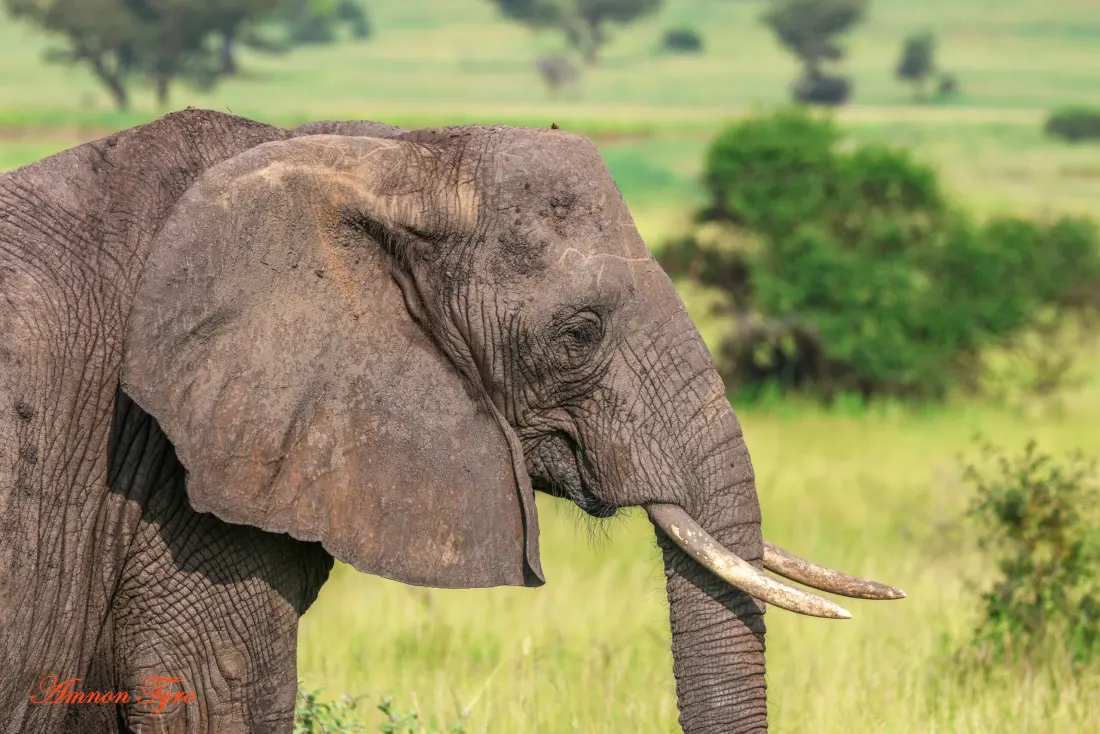
The full northern circuit at an unhurried pace, in high-end lodges and luxury camps.
Luxury lodges, a flight to the coast, and nothing at all to organise in between.
The classic northern route, with two nights in the Serengeti to make the distance worth it.
Timed and routed around the herds — Ndutu in calving season, the north for the river crossings.
Public campsites and a full crew, for travellers who would rather spend the budget on days than on thread count.
Nearby destinations
Travel tips
- —Pack layers — early-morning game drives in an open vehicle are cold even in the dry season
- —Bring a beanbag or window mount if you're travelling with a serious camera and long lens
- —Balloon safaris need to be booked ahead of arrival, not on the day
- —The migration is a natural phenomenon, not a schedule — we build in flexibility, not guarantees
Frequently asked questions
Not on demand — the herds move by rainfall and instinct, not a calendar, so no operator can promise a river crossing on a specific date. What we can do is put you in the right part of the ecosystem for the month you're travelling, based on where the herds have been tracking that season.
Yes. Resident lion, cheetah and leopard don't migrate, and the Seronera valley in particular has strong game viewing year-round. The migration is a bonus, not the only reason to come.
The crater is compact and near-guaranteed for a busy day of Big Five sightings in one small area; the Serengeti rewards more time and covers far more ground. Most of our itineraries include both for exactly this reason — they do different jobs.
Related reading
Tell us your dates and interests and we'll write back with a real itinerary, priced and ready to change.