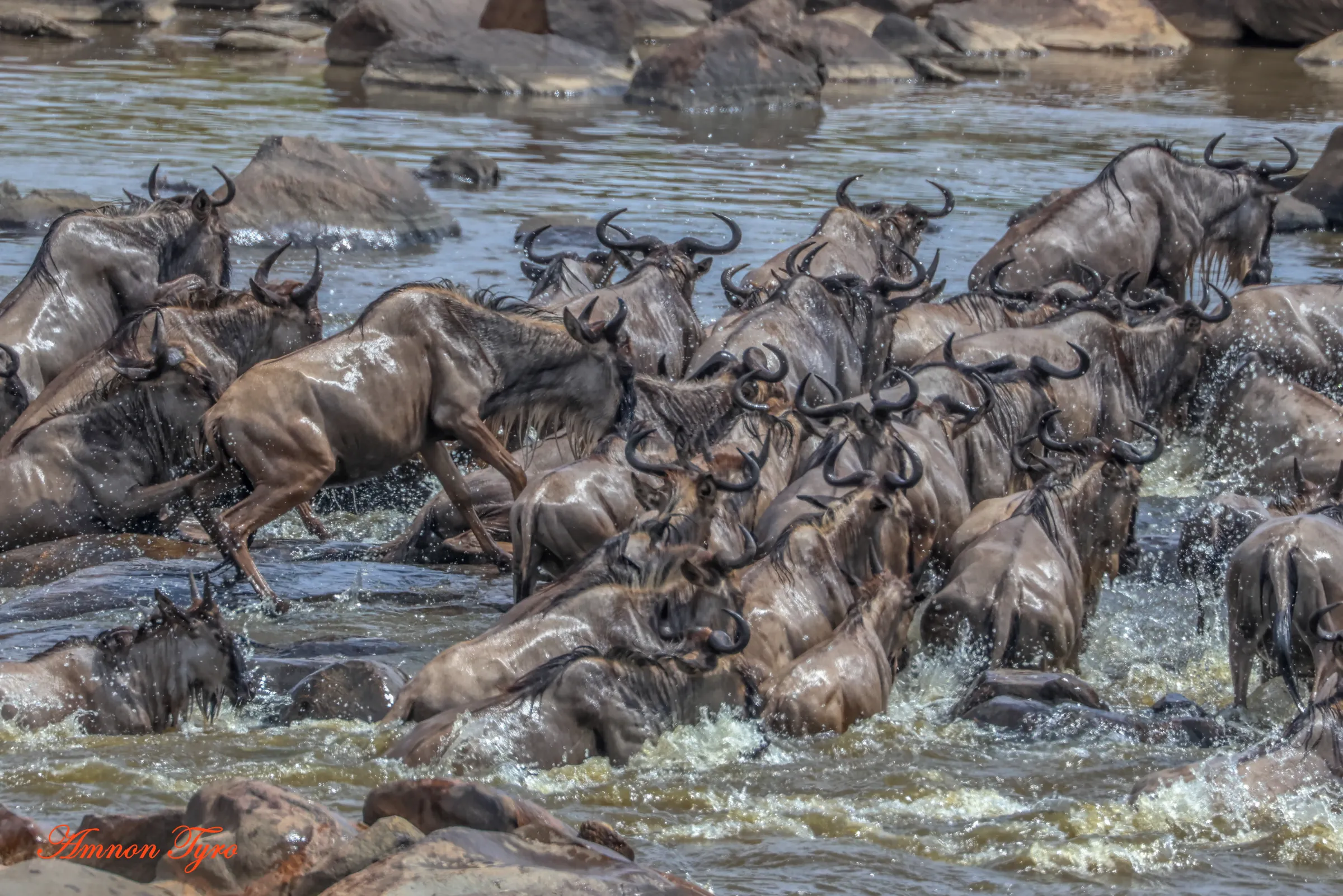
The Great Migration is not one event but a year-round loop — roughly two million wildebeest and zebra circling the Serengeti-Mara ecosystem in search of fresh grass. The river crossings people fly across the world to see are only a few weeks of that loop, and their exact timing shifts a little every year with the rains.
December to March, the herds are in the south, around Ndutu and the short-grass plains — this is calving season, with up to 8,000 wildebeest born a day and predators working the edges of the nurseries. There is no river crossing here, but the density of animals and the drama of newborns finding their feet within minutes is arguably the best game viewing of the year.
By April the grass is exhausted and the herds start moving north-west through the central Serengeti, arriving at the Grumeti River around May and June. Grumeti crossings are smaller and less predictable than the famous Mara ones, but the crowds are far thinner too.
July through October is prime time for the Mara River crossings — the ones in the documentaries, with wildebeest stacking up on the bank before a chaotic scramble across water that often holds large crocodiles. The herds cross and re-cross the Mara several times through this window as they graze the northern Serengeti and spill into Kenya's Maasai Mara, so a crossing is never fully guaranteed on any single day, but July to September is the strongest bet by a wide margin.
From November the short rains pull the herds back south again, closing the loop before calving season restarts. If a river crossing is the priority, we route trips for July–September; if newborn wildlife and thinner crowds matter more, we build around the Ndutu season instead. Either way, we set the exact camps and dates once we know your travel window, since the herds move on their own schedule, not the calendar's.
Tell us your dates and interests and a specialist in our Arusha office will send back a real, priced trip — not a brochure.
Request a proposal